
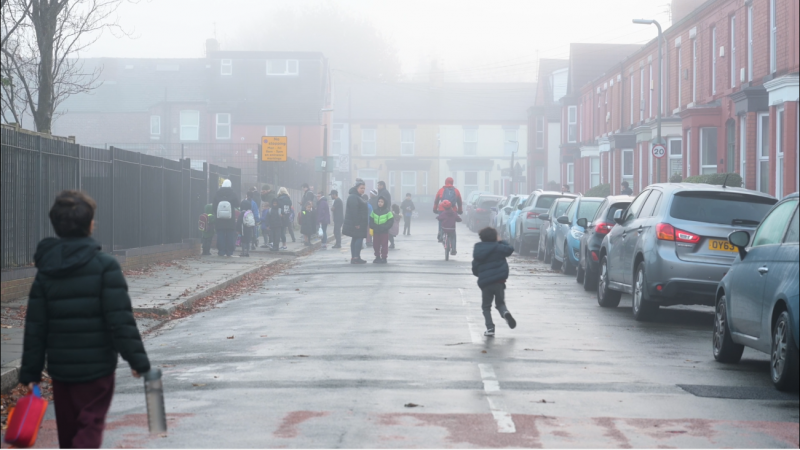
RESIDENTS are being invited to share their views on the City’s expanding School Streets programme, which is helping to create safer, healthier journeys for children and families.
Liverpool City Council is currently rolling out School Streets at primary schools across the City as part of a major programme to improve road safety.
More than 50 School Streets are due to be in place by May next year.
School Streets are designed to make the areas around schools safer during busy drop-off and pick-up times by temporarily restricting vehicle traffic outside of school gates.
The restrictions help reduce the number of vehicles travelling directly outside school gates, making it easier and safer for children and families to cross roads and access schools.
By reducing traffic and idling vehicles, School Streets can also improve local air quality and reduce congestion within communities.
It supports the Council’s ambition to encourage more people to walk, wheel and cycle to school and supports healthier lifestyles, while keeping children safe.
Restrictions are normally enforced through Automatic Number Plate Recognition (ANPR) cameras, which read number plates on cars driving through the zone.
The cameras don’t track people’s movements around the City and do not check other data related to people’s cars, such as whether they have a valid MOT. The cameras are only operational during the short, restricted periods at the start and end of the school day.
Exemptions are available for residents living on affected roads and people who cannot walk long distances.
To help shape the programme, the Council wants to better understand what residents, parents, carers, and schools know about School Streets and how they feel about them.
The feedback gathered will help inform the ongoing delivery of the programme and support future phases of School Streets across the City.
Councillor Dan Barrington, Cabinet Member for Transport and Connectivity said:- “School Streets are all about making the journey to and from school safer for children and giving families greater confidence to walk or cycle where possible. As we continue to expand the programme, it’s important that we understand what people know and think about School Streets. Your feedback will help us to shape our approach moving forward and understand how best to support all road users.”
Everyone is invited to take part by completing a short survey here.