
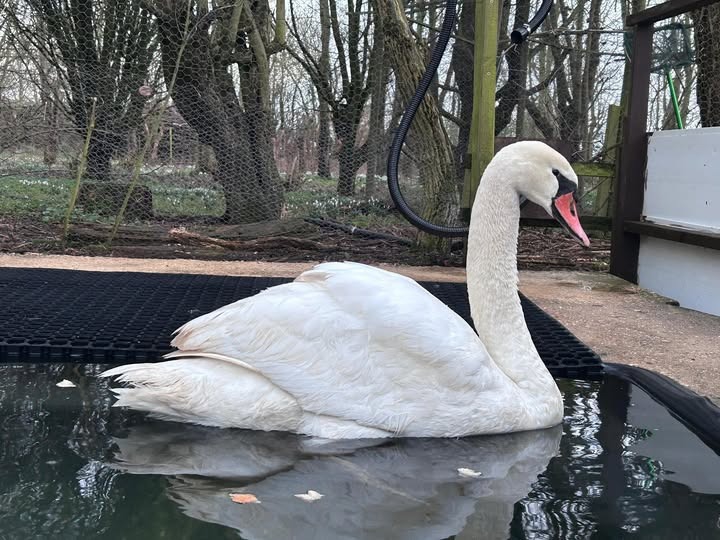
 Swan left with lasting injuries in Suffolk
STARTLING new statistics released today show the RSPCA has received its highest number of summer cruelty reports involving wild birds in 5 years - with lethal weapons such as catapults, slingshots and airguns being used in the horrific attacks.
Latest figures from the animal welfare charity show that 359 incidents involving wild birds were reported during July and August 2025 - almost double the 179 reports received during the same period in 2024, and the highest summer total recorded in the past 5 years.
The data also shows that the RSPCA received almost half (40%) of all reports of cruelty towards wild birds during the summer months last year, with longer days and increased time spent outdoors all thought to be contributing factors. Weapons such as airguns, slingshots and catapults have been used in the horrific attacks.
And, the worrying trend looks set to continue as the charity has already received 474 reports involving cruelty to wild birds so far in 2026, more than half than the number of total reports of this nature in 2025 (876).
The figures have been released as part of the RSPCA’s Cruelty Hurts Love Rescues campaign, which highlights the increased pressure on the charity’s frontline teams during the warmer months, when reports of animal cruelty typically peak.
The birds most commonly targeted last year include pigeons, corvids (such as crows, magpies and ravens), gulls, swans and ducks, with many incidents involving catapults, air weapons and other deliberate acts of violence.
While there is no single explanation for the rise, the RSPCA believes a range of factors may contribute to deliberate attacks on wildlife. These can include deliberate misuse of catapults and air weapons, copycat behaviour, greater exposure to harmful online content, and a lack of understanding about animal welfare.
The charity stresses that the vast majority of people would never deliberately harm an animal, but believes early intervention is important when concerning behaviour is identified.
Mike Scargill, Wildlife Partnerships Manager for the RSPCA said:- “We are deeply concerned by the number of reports involving deliberate cruelty towards wild birds. Day after day, our frontline officers and animal centres see the sickening consequences of weapons being used on animals - causing awful suffering, severe injuries and often leading to death. These figures are likely to represent only a fraction of the true scale of the problem because a lot of cruelty goes unseen and unreported. This is why we need our supporters to back our Cruelty Hurts Love Rescue campaign so we can tackle this horrific trend. Wild birds feel pain, fear and distress, and deserve our care and respect. Deliberately harming them causes immense suffering and can have devastating consequences for both individual animals and local wildlife populations.”
In 2025, the counties recording the highest number of reports involving deliberate cruelty towards wild birds were:-
Gulls shot in Merthyr Tydfil
An adult gull found in Merthyr Tydfil was dragging his wing and repeatedly collapsing to the ground after being shot. The bird was taken into RSPCA care, but due to the severity of his injuries, had to be put to sleep. An X-ray later revealed an airgun pellet lodged inside his body alongside a fractured wing, highlighting the devastating injuries these weapons can inflict on wild birds.
Swan left with lasting injuries in Suffolk
A swan rescued near Woodbridge after being found unable to stand or walk was discovered to have been shot in the leg with an air weapon. The injury had become badly infected, leaving her in significant pain and unable to feed properly, which in turn caused severe weight loss. RSPCA officers transferred the swan to a specialist wildlife rehabilitation centre for treatment, but she was left with lasting nerve damage as a result of her injuries.
Buzzard tied to a tree in Wales
A buzzard found dead in woodland in Powys had been tied to a tree root using a blue rope secured around one of his wings in a sickening act of cruelty. Evidence at the scene suggested the bird had struggled for some time before he died, and he was also found to have injuries to 1 wing.
Pigeons found in a crate in Oxfordshire
In 1 of the most shocking incidents investigated by the RSPCA, a crate containing the bodies of 25 pigeons was found abandoned beside a litter bin in Chipping Norton. Many of the birds had injuries consistent with being shot using air weapons, including pellet wounds and broken wings. Evidence suggested some had not died instantly, meaning they are likely to have experienced prolonged suffering before being dumped.
Wild birds targeted in crossbow and catapult attacks in Hertfordshire
3 birds were found with darts in their bodies and a gosling was hit with a catapult in a series of attacks in Lea Valley Park, Waltham Cross, during May.
A Canada goose was taken for treatment at the Swan Sanctuary after they were found with a dart through their chest. In another incident, rescuers from the sanctuary were able to remove a dart from a goose’s wing at the scene. There was also a report of a greylag goose with a dart through his chest but sadly there has been no trace of him since.
Some of the darts recovered are reported to be seven inches long. It was also reported that a gang of youths were seen luring a gosling with bread before shooting the bird with a catapult - the bird has not been found since.
Duck and ducklings targeted in catapult attack in Kent
Reports that a duck was killed in a catapult attack and two ducklings were injured in Sherness were made to the RSPCA in May. The attack happened in The Fleet near Hawthorn Avenue on 30 May 2026 and Kent police launched an investigation.
Gull spotted with crossbow bolt embedded in body in Dorset
A seagull was spotted in Weymouth with a crossbow bolt impaled in its body last month. The bird was seen by a member of the public with the lethal object protruding from its chest but was able to fly off when approached. As the gull is mobile the charity has advised that the public should monitor the bird and have appealed for information about who is responsible for the attack.
To help address the worrying trend the RSPCA is working with partners to tackle wildlife crime through initiatives such as Operation Lakeshot, which brings together police forces and conservation organisations across the country to tackle the illegal use of catapults and other offences against wildlife. The public can also help by supporting the RSPCA’s Cruelty Hurts, Love Rescues campaign.
Partnership working, alongside education and early intervention, is vital to reducing deliberate cruelty towards animals and the RSPCA is encouraging anyone who witnesses deliberate cruelty towards wildlife to report it to the charity.
Adults who are worried about a young person’s behaviour towards animals are also encouraged to seek advice through the RSPCA’s early intervention referral service, where support can help address concerning behaviour before it escalates.
All wild birds are protected under the Wildlife and Countryside Act 1981, and it is illegal to deliberately kill, injure or take 1, except under licence; any permitted lethal control must involve more humane methods. Anyone found contravening this could face up to 6 months imprisonment and an unlimited fine.
Every summer, animal cruelty peaks. Right now, it’s at its highest level in 5 years. But cruelty isn’t the strongest force at work this summer. Love is. Together, we can turn this season of cruelty into 1 of love, kindness and rescue.